

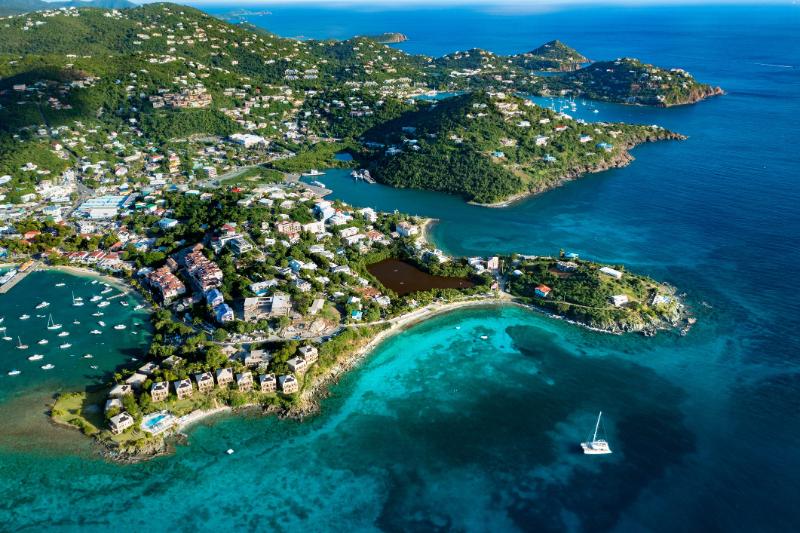
An aerial view of homes in St. John, U.S. Virgin Islands, with hillside views and picturesque bays that draw luxury buyers from all over the world.
You might be dreaming of owning your very own slice of Caribbean real estate, but should you build it from scratch or buy it ready-made? There isn’t a straightforward answer, and it usually comes down to timeline, budget, local permitting, utilities, access points, and your lifestyle priorities.
If you’re choosing between homes for sale and land for sale in St. John, USVI, you need to carefully weigh the pros and cons.
This short guide walks you through the practical trade-offs of buying a move-in-ready home versus building on St. John, so you can make a more informed decision.
Table of Contents:
The case for buying a turnkey home in St. John, USVI
For many buyers, purchasing an existing home on St. John is the more straightforward approach. Here are a couple of reasons why:
- Clearer pricing from the outset. You’re negotiating a defined asset, with land, structure, utility systems, and other improvements included. Inspections, insurance estimates, and rental history (if applicable) can all be reviewed before closing.
- A shorter timeline to use or rent the property. Once the transaction closes, you can move in or begin operating as a vacation rental, assuming licensing requirements and HOA rules are satisfied. There’s no construction runway to factor in.
- Established infrastructure. Access roads, utility connections, cistern capacity, and site drainage are already in place. On an island where topography and access points can significantly affect cost and convenience, that level of certainty has real value.
- A clear picture of the immediate environment. You can evaluate sightlines, trade winds, neighboring properties, and drive time to town or beaches in real time — not just on a site plan.
- Less exposure to construction volatility. Material costs, shipping schedules, and contractor availability can shift over the course of a build. With a resale home, those variables have already been absorbed into the price.
That said, inventory on St. John is limited. Well-priced homes with strong views, solid access, and consistent rental performance tend to attract attention quickly.
Buyers who choose the turnkey route should be prepared to act decisively when the right property becomes available. That’s why in the USVI real estate market, it’s important to work with a local Realtor who can provide steady guidance.
The case for buying land for sale in St. John, USVI
For buyers who want to shape every detail — from home orientation to high-end finishes — purchasing land offers flexibility that resale homes simply can’t. But it goes without saying: this option also introduces additional layers of planning and costs.
Here are the main reasons why some buyers opt to buy land and build from scratch:
- Complete control over design and orientation. You decide how the home sits on the parcel — how it captures trade winds, frames the view, and responds to the island’s topography — rather than adapting to someone else’s layout.
- A layout tailored to your lifestyle. Whether you want separate guest suites, a dedicated rental wing, indoor-outdoor living spaces, or a pool positioned for sunset, you’re designing around how you intend to use the property.
- Intentional material and system choices. From roofing and impact-rated windows to backup power and water storage, you select the specifications rather than inheriting them.
- The ability to build to current standards. New construction allows you to incorporate modern engineering and building practices from the outset, which can influence efficiency, durability, and insurability.
- Long-term vision and value creation. A thoughtfully designed home that maximizes its buildable envelope and site characteristics can feel cohesive and purpose-built in a way many resale homes are not.
Of course, building your dream Caribbean retreat requires a lot of patience and coordination. Zoning review, permitting through the Department of Planning and Natural Resources, engineering, infrastructure planning, and contractor scheduling all extend the timeline. Plus, costs can shift over the course of construction, and a contingency reserve is prudent.
For buyers seeking immediate occupancy or near-term rental income, that longer runway should be carefully considered.
A checklist of what to evaluate before you decide
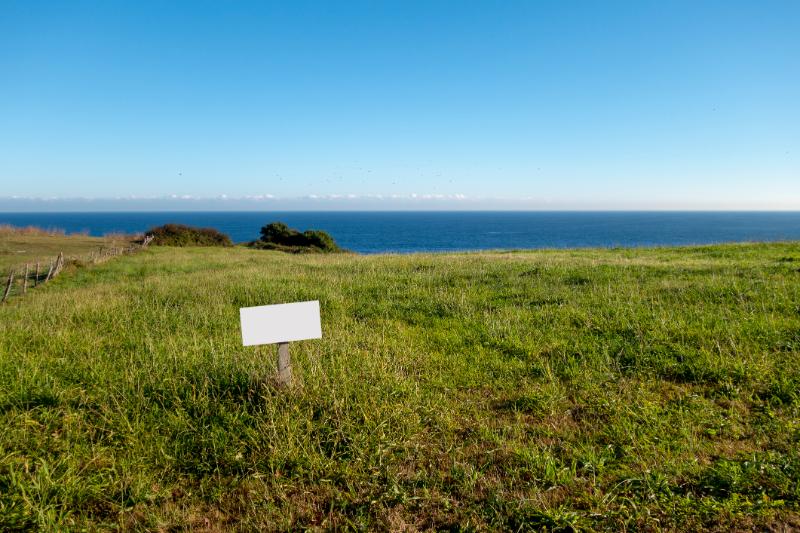
Undeveloped land can offer the flexibility you’re looking for, but buyers should confirm access points, utilities, and build requirements early-on.
On St. John, whether you purchase an existing home or build from the ground up, the purchase price is only part of the equation. Site conditions and logistics can materially affect both cost and timeline. Here’s what to take into account.
Total project cost (not just acquisition cost)
Land may appear less expensive upfront — half-acre parcels can sometimes trade in the low six figures — but construction costs on St. John are often cited in the high hundreds per square foot depending on design and finish level. Resale homes may begin in the mid-to-upper six figures and rise quickly based on views and location, but the majority of costs are defined at closing.
Topography and drainage
Steep grades, soil conditions, and natural drainage patterns directly influence foundation design, driveway engineering, and long-term water management. What looks like a buildable hillside on a listing sheet may require substantial excavation, retaining walls, or engineered solutions once plans are underway.
Easements and boundaries
Access easements, utility corridors, and boundary lines should be confirmed early — ideally through a current survey. On an island where parcels can be irregular and access roads shared, clarity around legal access and buildable area is essential.
Cistern and infrastructure requirements
Under local USVI guidelines, cistern sizing is tied to roof area (at approximately 10 gallons per square foot for one-story roofs and 15 gallons per square foot for two-story structures). This requirement alone can heavily dictate both design and budget during a build.
Timeline to occupancy
A turnkey home can allow use or rental activity shortly after closing (subject to licensing and specific HOA rules). New construction typically takes several years or longer, depending on permitting, contractor schedules, and project scope.
Insurance and carrying costs
Property insurance in the USVI is often estimated at roughly 2%–4% of a home’s insured value annually, though premiums vary based on elevation, construction type, and storm-mitigation features. If you choose to build, those carrying costs accrue during the construction period as well.
Rental income assumptions
If income generation is part of the strategy, make it a point to compare realistic occupancy projections against carrying costs. A completed home with documented rental history already has useful data, but a new build from scratch will have to rely on projections.
Find land and homes for sale in St. John, USVI with ease
If clarity around total cost and timing is paramount, a turnkey home usually provides the more predictable route. If control over home design and long-term vision outweigh urgency, building from the ground up may be worth the effort.
Whatever you choose, make sure you get a real estate professional to weigh in.
Karye Carney, a seasoned St. John, USVI Realtor affiliated with Holiday Homes, the island’s oldest — yet most forward-thinking — real estate firm, is here to guide you every step of the way.
Make your next real estate transaction easy by calling 340.513.1960 or sending an email.